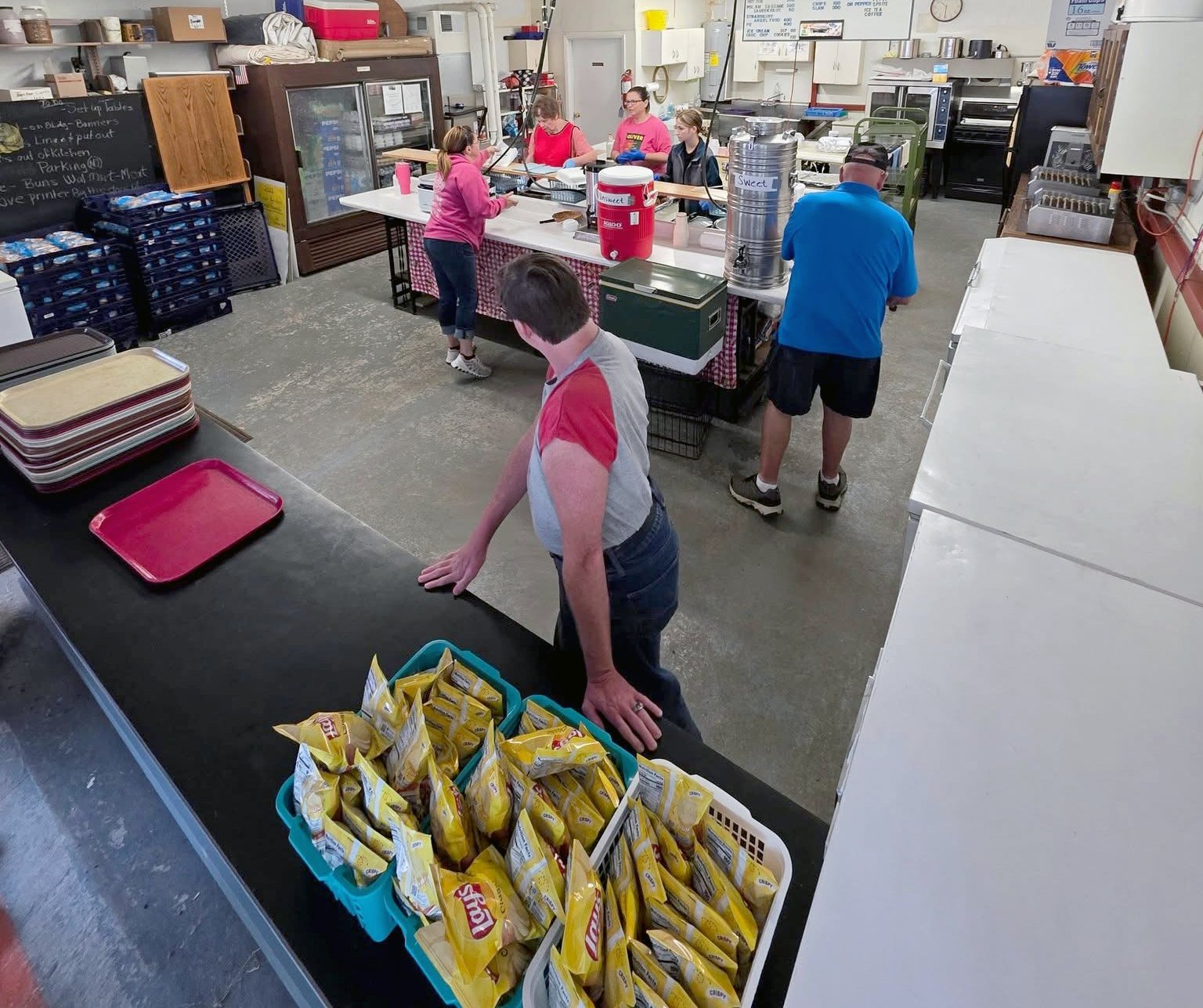
The Macoupin County Agricultural Antique Association pavilion is a food service building offering pork chops, pork burgers, Polish sausage, chips, deserts and beverages during the spring and fall festivals.
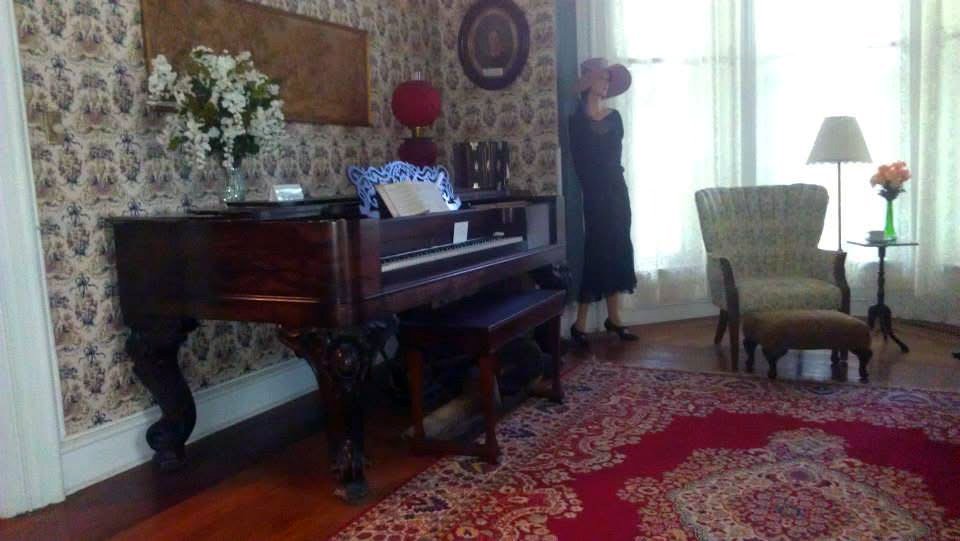
The J.C. Anderson Home is the centerpiece of the Macoupin County Historical Society grounds. The 13-room home was acquired by the Macoupin County Historical Society in 1973 and now serves as the MCHS Museum, featuring exhibits and artifacts related to county history. Local banker C.H.C. Anderson built the home as a wedding gift for his son and daughter-in-law, John C. and Lucy Anderson. The couple lived in the home until their deaths in the 1930s. The original structure was a one-story home constructed in the Italianate style of architecture. The second floor, attic and towering widow’s watch were added later as the family grew. With the later additions, the home combines elements of Italianate, Victorian and Stick architectural styles. The home remained in the family until the 1970s, falling into a state of considerable disrepair. In June, 1973, the newly formed Historical Society had an opportunity to purchase the home, along with 16.5 acres and associated outbuildings, from Mrs. Jessie Crawford, a daughter of John C. Anderson. At that time, the home had fallen into an advanced state of disrepair. With donations and countless hours of volunteer labor, the home was rehabilitated and restored. Today, the first floor is restored to resemble the stately surroundings in which the Anderson family once lived. Several pieces of furniture and a china service were actually owned by the Andersons. The second floor is largely restored to the home’s original state, but also houses some exhibit space. The attic area is home to historical exhibits, including an extensive military exhibit. The J.C. Anderson Home was added to the National Register of Historic Places on Nov. 5, 1992.
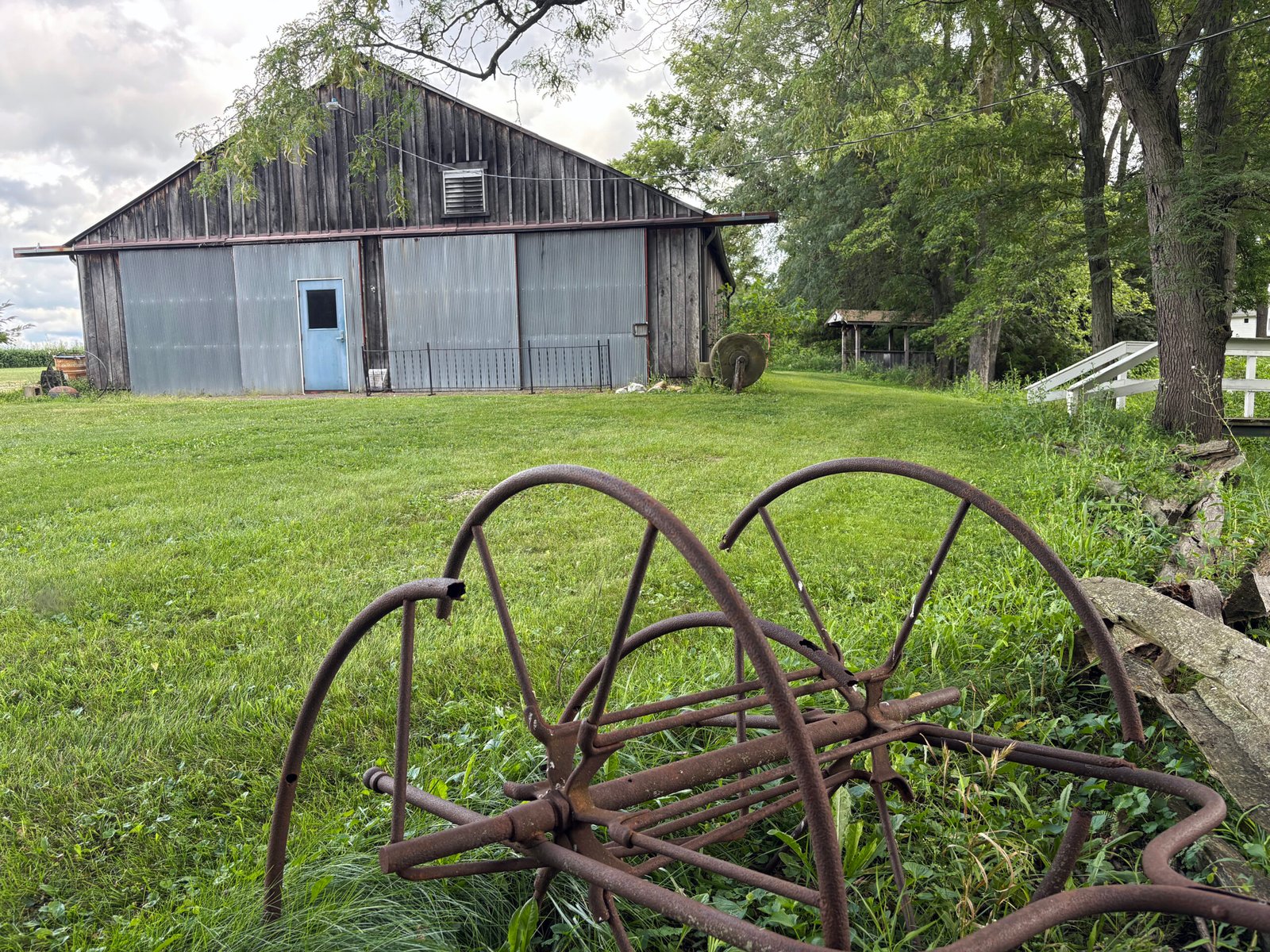
The MCHS Blacksmith Shop is home to the Macoupin County Blacksmiths and the hosting venue for the annual Illinois Valley Blacksmiths Association’s Hammer-In in November. The shop is a working blacksmith shop with multiple forges, anvils and assorted blacksmithing equipment. The shop produces numerous items for sale to the public including hand-forged shepherd hooks, Christmas stocking hangers, ladles, hot dog roasting forks and other items. The shop also is available for custom work. Contact Greg Brown at (618) 567-1512 to arrange for custom work.
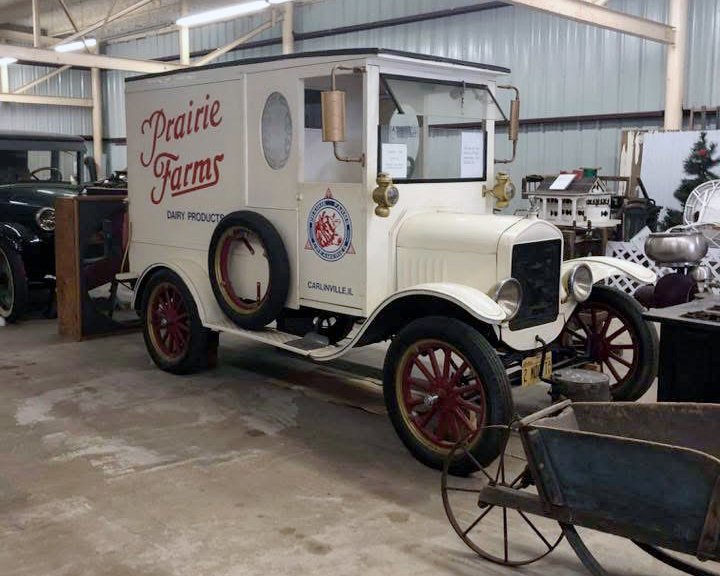
Building No. 2 is a display building featuring exhibits related to domestic life, farming and vocations from the 1800s forward. Among the items on display are a vintage Prairie Farms delivery truck, antique printing equipment, antique household items, antique toys, and so forth. After being closed for several years, volunteers are working to reorganize and curate items to make a more meaningful experience for visitors.
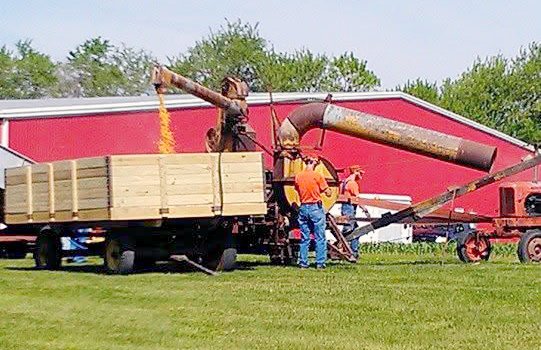
The generically designated Building No. 3 is used primarily to store antique agricultural equipment that periodically is used to perform various farming operations on MCHS’s property. It is not generally open to the public.
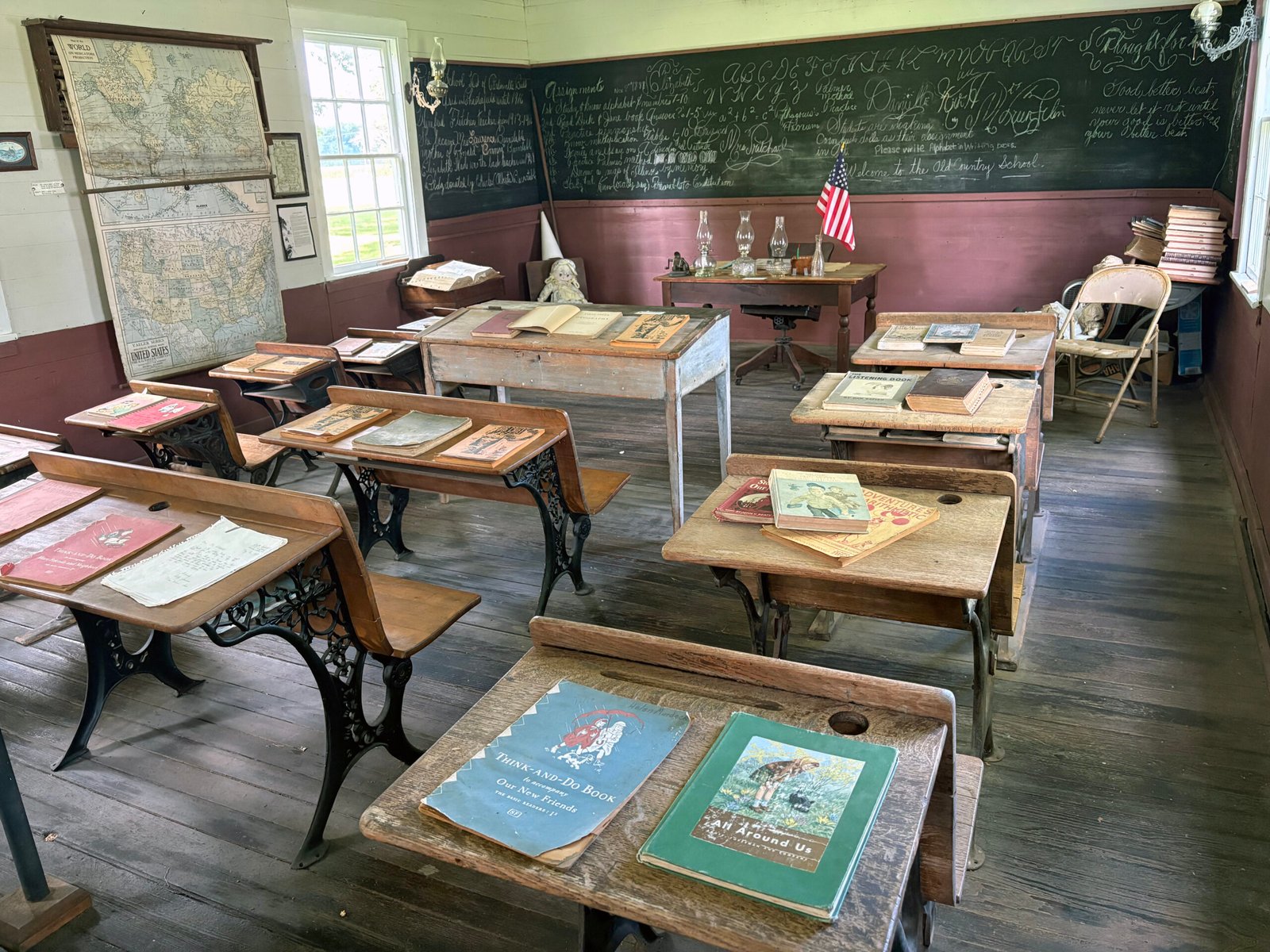
The MCHS Rural Schoolhouse was moved to the Society’s grounds from another location. It has been restored to duplicate the furnishings and look of a rural one-room school. The restoration includes actual slate blackboards, student desks, a raised teacher’s station, a wood-burning stove, and period educational materials. During the spring and fall festivals, the building is open to visitors and youngsters can “ring the bell” for a !0-cent donation.
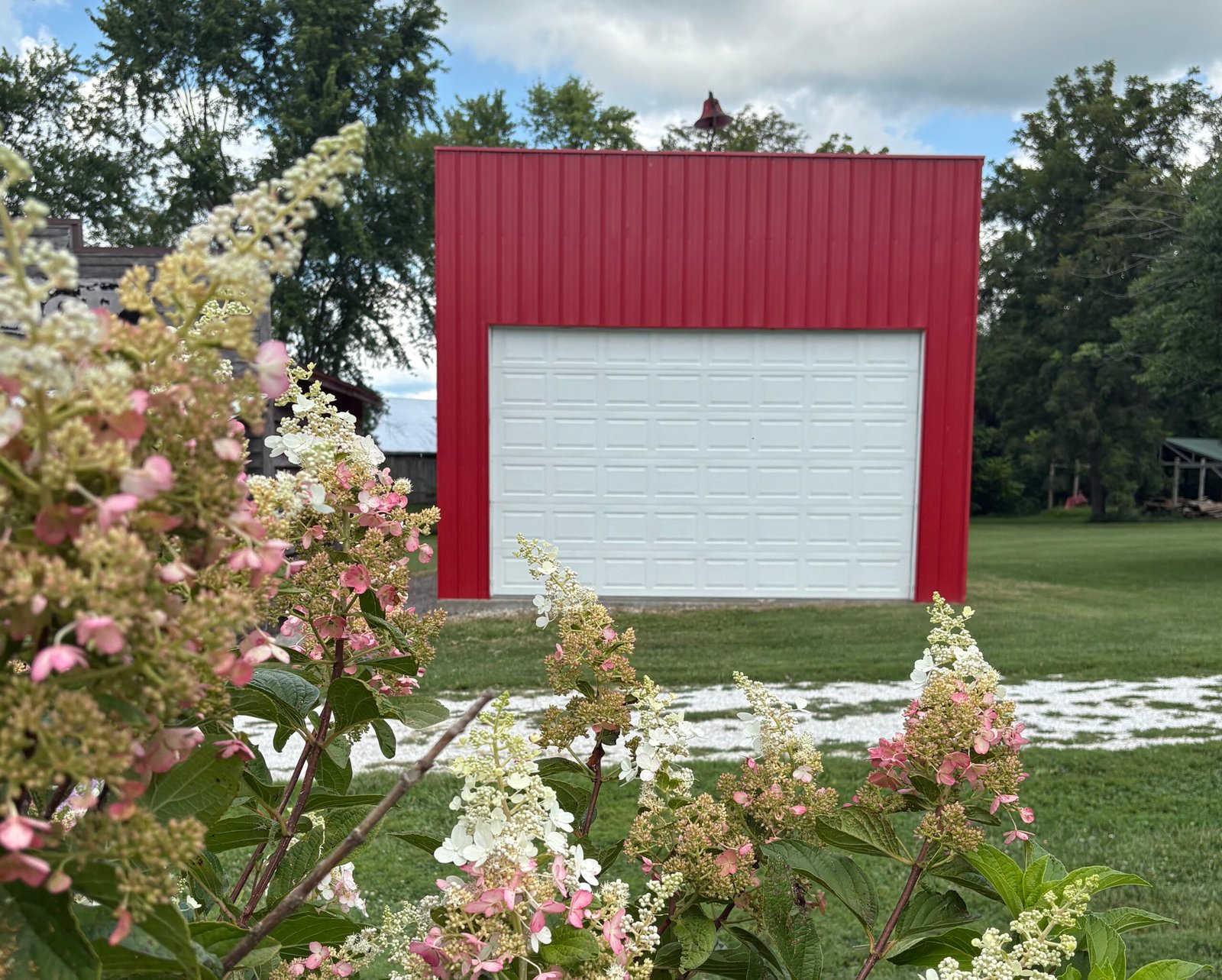
Built and maintained by the Carlinville Fire Protection District, the Firehouse houses displays of historic fire engines and fire fighting equipment.
A work in progress, the Mark Bouillon Service Station memorializes the late Mark Bouillon, a longtime MCAAA member and volunteer. Future plans include furnishing the interior and adding fuel pumps to the front of the building for permanent display.
Built in 2011, the Ruyle Genealogy Building honors the memory of long-time MCHS members and volunteers Henry and Alene Ruyle, Scottville. The genealogy library includes obituaries, family histories, county history and other materials utilized by researchers. The library is available to researchers from 10 a.m. to 3 p.m., Wednesdays, weather permitting. To visit at other times, please contact Libby Klocke, librarian, at 217-965-4563 to make arrangements. In addition to the library, the building has a large meeting room with a small kitchenette. The meeting room is used for MCHS meetings and programs. It also is available for rent for wedding receptions and other private events.
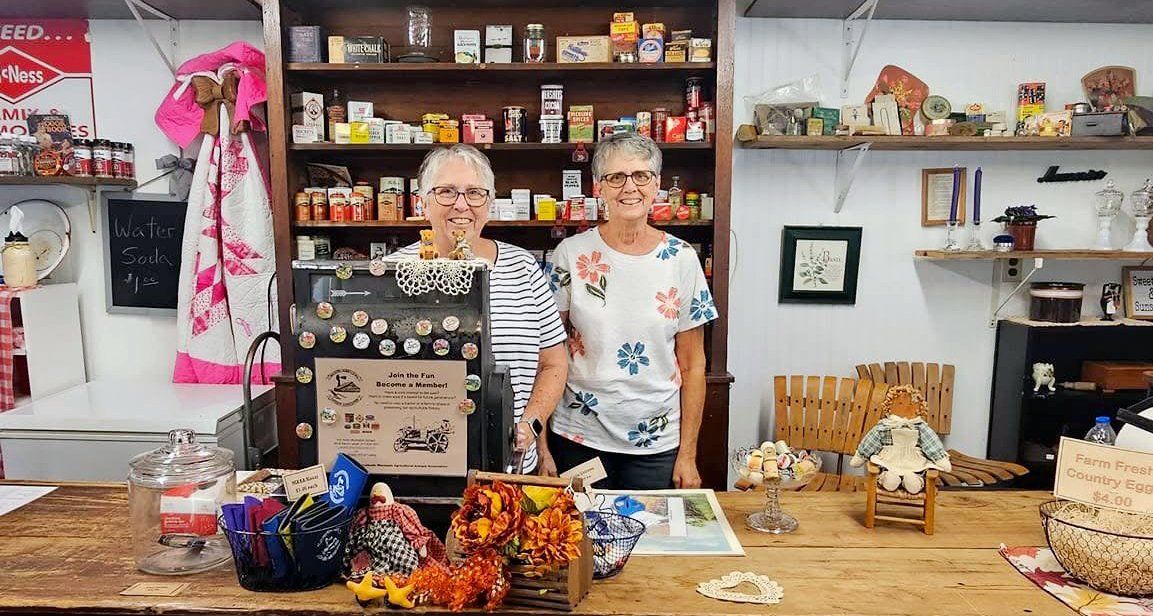
Located on the east-west street leading the the Macoupin County Agricultural Antiques Association, the General Store offers penny candies, cold drinks, souvenir items and one-of-kind antiques during the spring and fall festivals, as well as the MCHS Christmas Show in December. Costumed “proprietors” operate the store with proceeds benefitting the MCAAA.
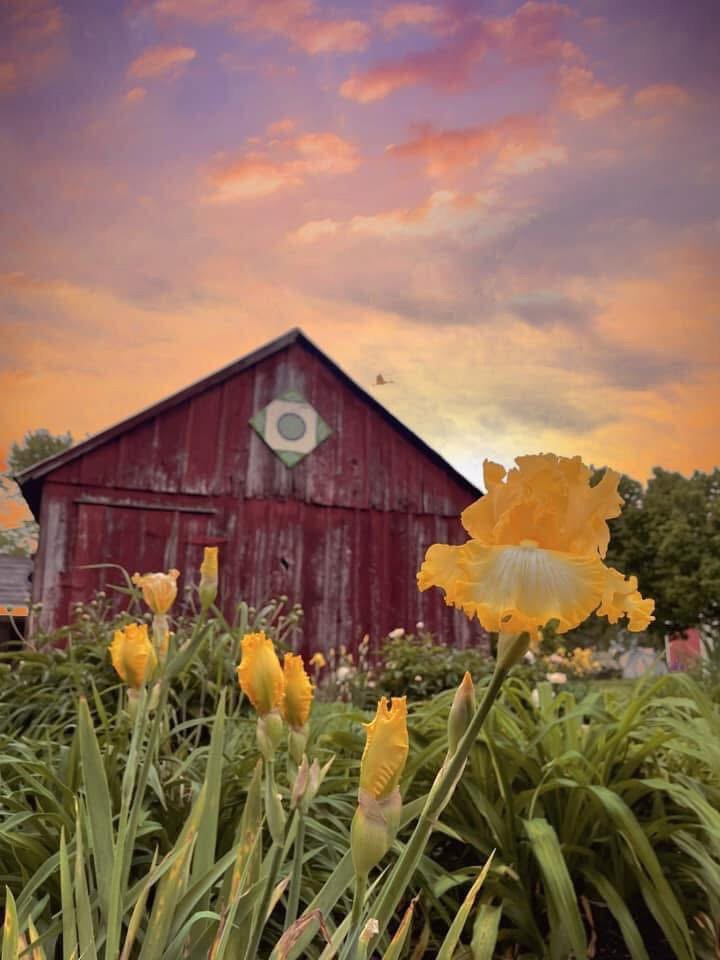
Along with the “Red Barn,” the Granary is one of the few surviving buildings original to the Anderson Estate. Today, the building is used to store tools, equipment and supplies for the Macoupin County Master Gardeners group to maintain the adjacent herb garden and Victorian flower garden. During the spring festival, it is the location for the Master Gardeners annual plant sale.
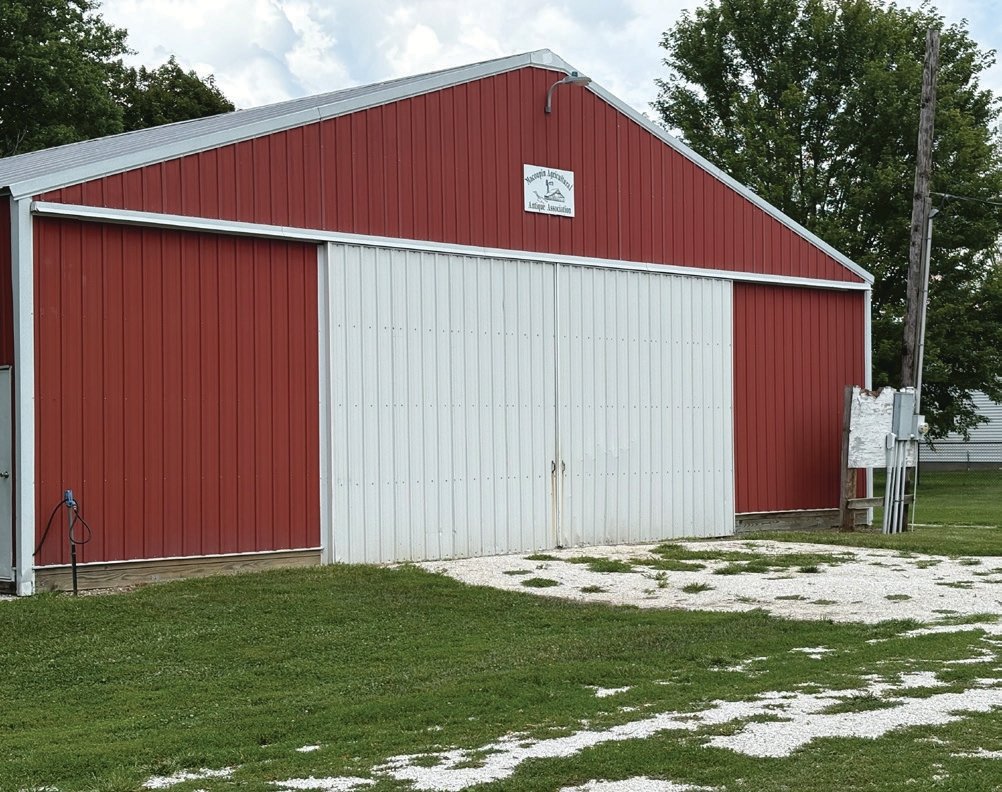
The Hays Building is used by the Macoupin County Agricultural Antique Association for storage and generally is not open to the public.
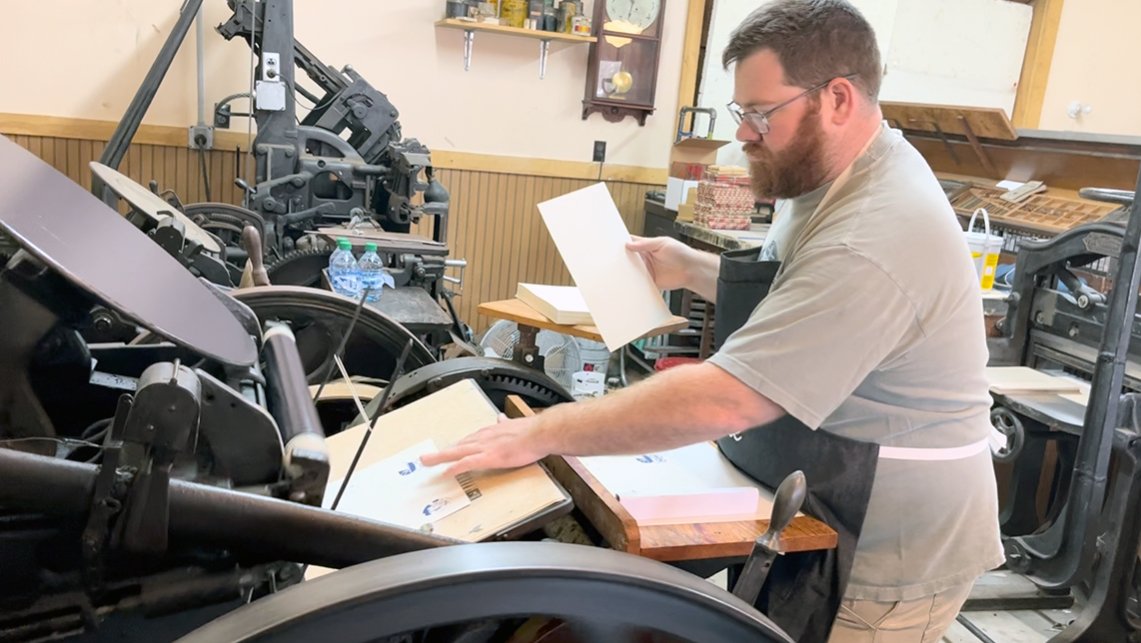
The Print Shop was constructed in the mid-1990s after the now-defunct Carlinville Democrat newspaper donated a Chandler and Price printing press, a Linotype typesetting machine, and a large paper cutter. The paper cutter was stored outside for a few years and deteriorated beyond repair and the Linotype was stored in a garage where many of the delicate parts corroded. The press, however, dating to 1907, has been restored and now operates throughout the year. The Linotype has been replaced with a 1922 Intertype, making MCHS one of about 200 locations nationwide that has a working line casting machine onsite. The Print Shop also recently acquired a Heidelberg windmill press built in 1957. All materials printed at the Print Shop are produced using letterpress technology, a largely obsolete printing method that virtually vanished in the late 1960s and early 1970s. Simply put, the printers print from a raised surface that is first inked, then impressed onto a piece of paper. Some printed pieces are printed from etched plates, but much of what is produced in the Print Shop is printed from type set on the Intertype and/or hand set from more than 100 cases of handset type in the shop. Siding on the existing building was milled at the MCHS sawmill. Two milk-globe hanging light fixtures were salvaged from the former Carlinville South School. The shop is available for custom work, such as hand-printed wedding invitations and stationery, business cards or letterheads. Some of the printed materials distributed by the Historical Society are produced at the shop. At Christmas, the shop traditionally produces hand printed Christmas cards using a laborious process that requires multiple press runs to achieve multiple colors.
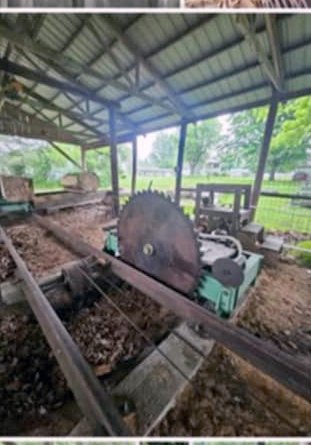
MCHS is proud to be the location of a working 19th century sawmill. During the spring and fall festivals, volunteers demonstrate converting logs into boards. A set of bleachers is available for visitors to view the operation from a safe distance. The sawmill is available for custom work. To arrange for custom work, please contact Greg Brown at (618) 567-1512.
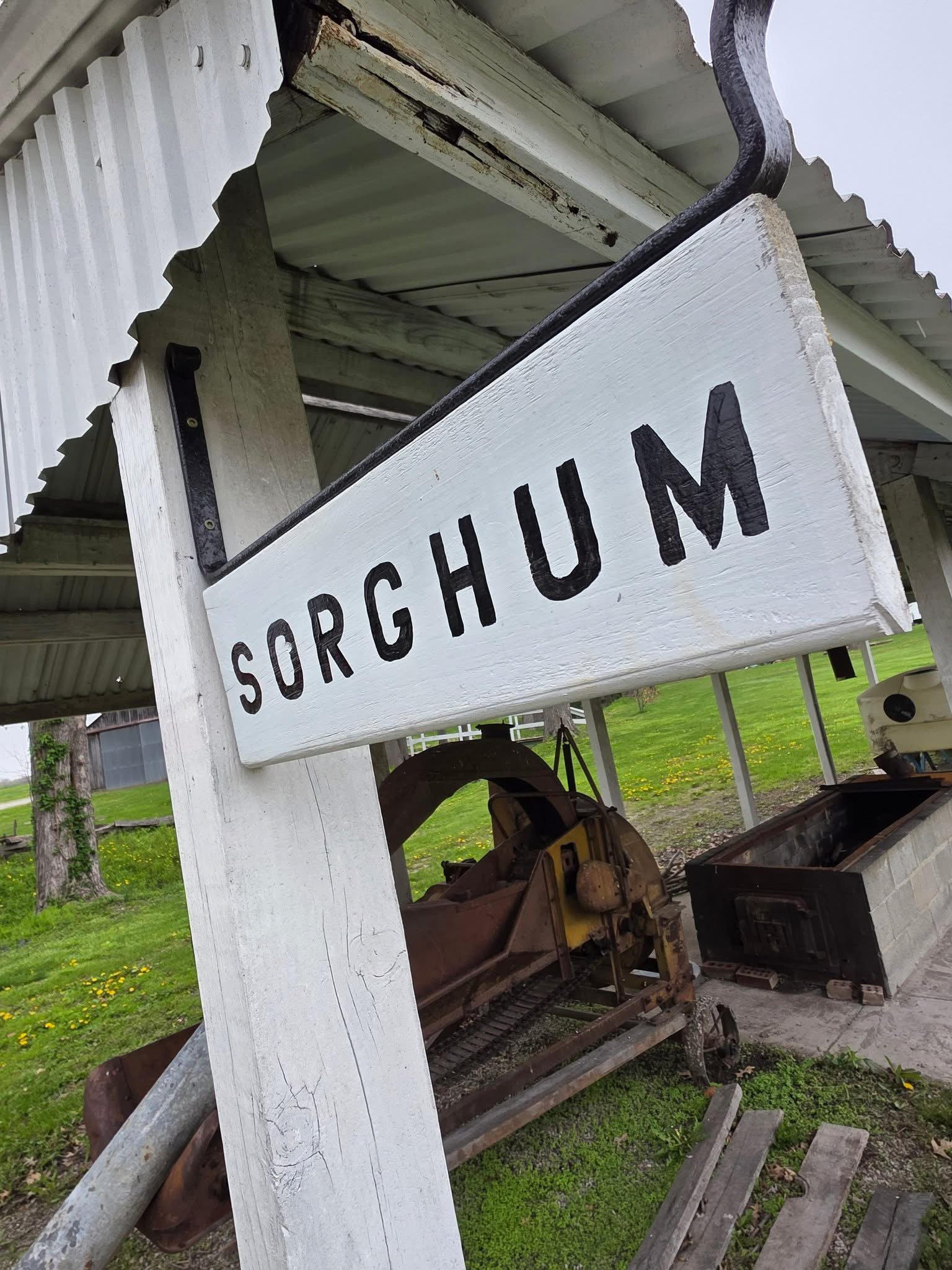
During the fall festival, the Sorghum Shack comes to life as volunteers strip and squeeze sorghum cane grown on the MCHS property. The resulting juice is boiled down into molasses using a wood-fired evaporator. Sorghum molasses produced at the MCHS Sorghum Shack is available for purchase in the General Store.